
Summary
The Historical Foundations of Arabic Numerals in Horology
The Technical and Aesthetic Evolution of Watches with Arabic Numerals
MaisonDuTemps' MTZeta: The ultimate Arabic numeral watch
The Historical Foundations of Arabic Numerals in Horology
Introduction and Dissemination of Arabic Numerals in Europe
The history of Arabic numerals in Europe is a fascinating saga of cultural transmission and innovation. These numerals, originating from the Arab world, were introduced to Europe around the 10th century. Their adoption marked a decisive turning point, particularly in the field of horology. Before this period, clocks and watches primarily used Roman numerals, which, while stylistically distinct, presented certain limitations in terms of readability and simplicity. The introduction of Arabic numerals not only improved precision in time measurement but also paved the way for more advanced and accurate watch designs, thus facilitating the creation of more complex and functional watches and clocks.

Impact of Arabic Numerals on Watch Design
Arabic numerals revolutionized watch design, bringing a touch of modernity and functionality. Their clear form and ease of reading allowed watchmakers to design dials that not only display time more legibly but are also aesthetically pleasing. This transition opened the door to a diversity of styles, allowing watch creators to express themselves through a variety of designs ranging from modern minimalism to ornate luxury. Arabic numeral watches became synonymous with modernity, providing an ideal canvas for innovation and creative expression in the art of timekeeping.
The First Watches with Arabic Numerals and Their Significance
The first watches to incorporate Arabic numerals marked an important step in the history of horology. These watches were not just time-measuring instruments; they were symbols of progress and openness to new ideas and techniques. By adopting Arabic numerals, watchmakers demonstrated their willingness to embrace change and innovate. These early watches laid the groundwork for what would become a standard feature in horology, profoundly influencing the development and design of watches in subsequent centuries.
The Technical and Aesthetic Evolution of Watches with Arabic Numerals
Mechanical Advancements and Innovations
Arabic numeral watches have benefited from a series of technical innovations over the centuries. Advances in watchmaking mechanics, such as the introduction of more precise movements and the miniaturization of components, have made it possible to create more reliable and accurate watches. These advancements were crucial for the development of watches capable of measuring time with unprecedented accuracy. Furthermore, the integration of new technologies and materials has allowed for the production of watches that are not only more performant but also more durable and suitable for a variety of use conditions.
Diversity of Styles and Cultural Impact
The diversity of styles of Arabic numeral watches reflects their cultural impact and adaptability to changing fashion and design trends. From classic and elegant models to avant-garde and bold creations, Arabic numeral watches have spanned different eras, adapting and evolving with time. This ability to reinvent themselves has allowed Arabic numeral watches to remain relevant and prized, reflecting the tastes and preferences of a diverse and demanding clientele.

Watches with Arabic Numerals in the Modern Era
In the modern era, watches with Arabic numerals continue to play a leading role in horology. They combine advanced technologies with innovative designs, while remaining faithful to their rich heritage. Modern Arabic numeral watches, such as MaisonDuTemps' MTZeta, illustrate this fusion of tradition and innovation. They embody the evolution of watchmaking, where respect for the past combines with a forward-looking vision.
MaisonDuTemps' MTZeta: The ultimate Arabic numeral watch
Innovative Design and Unique Features
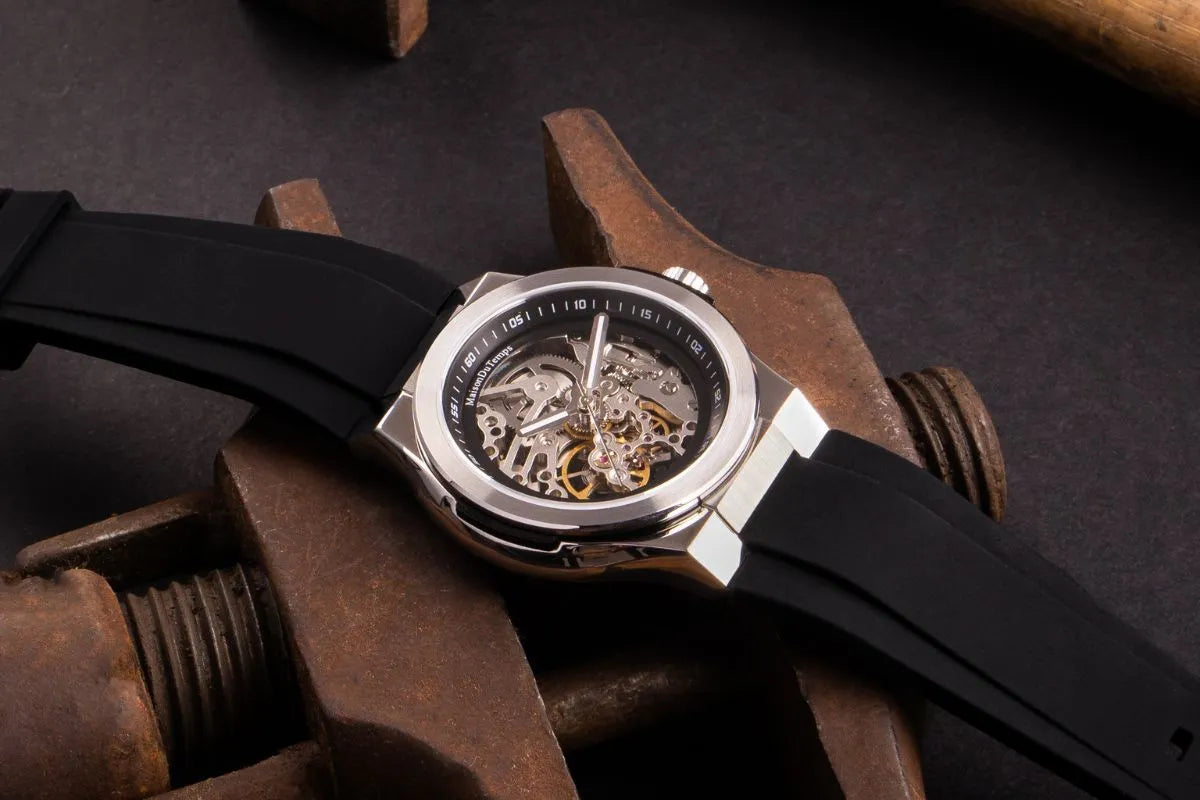
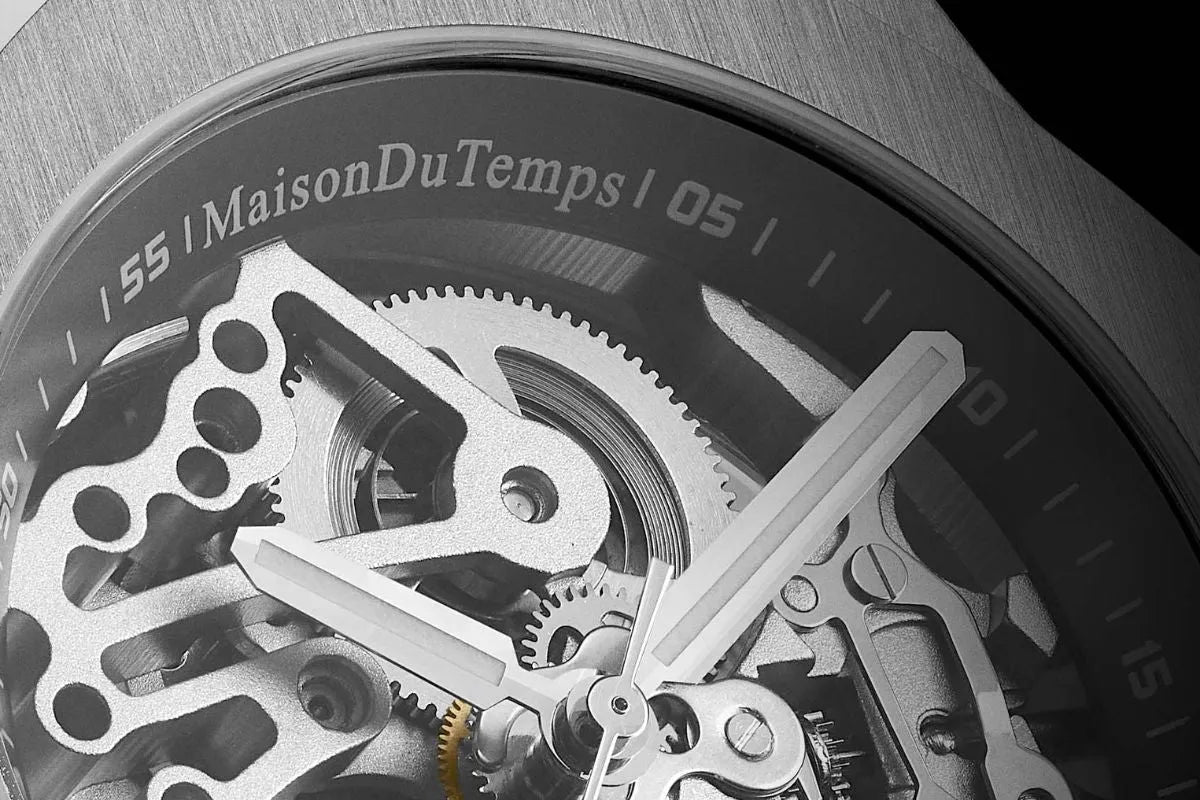
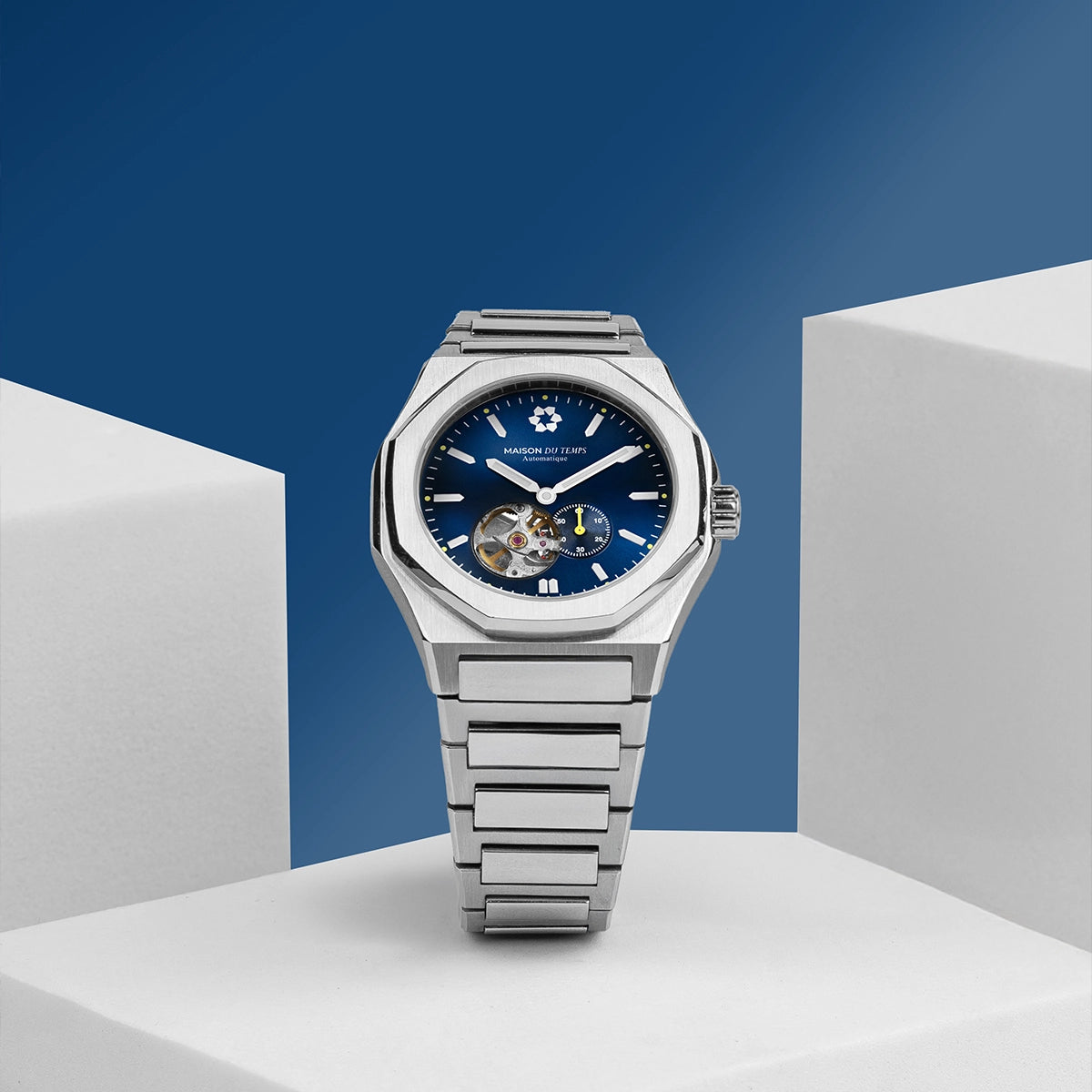
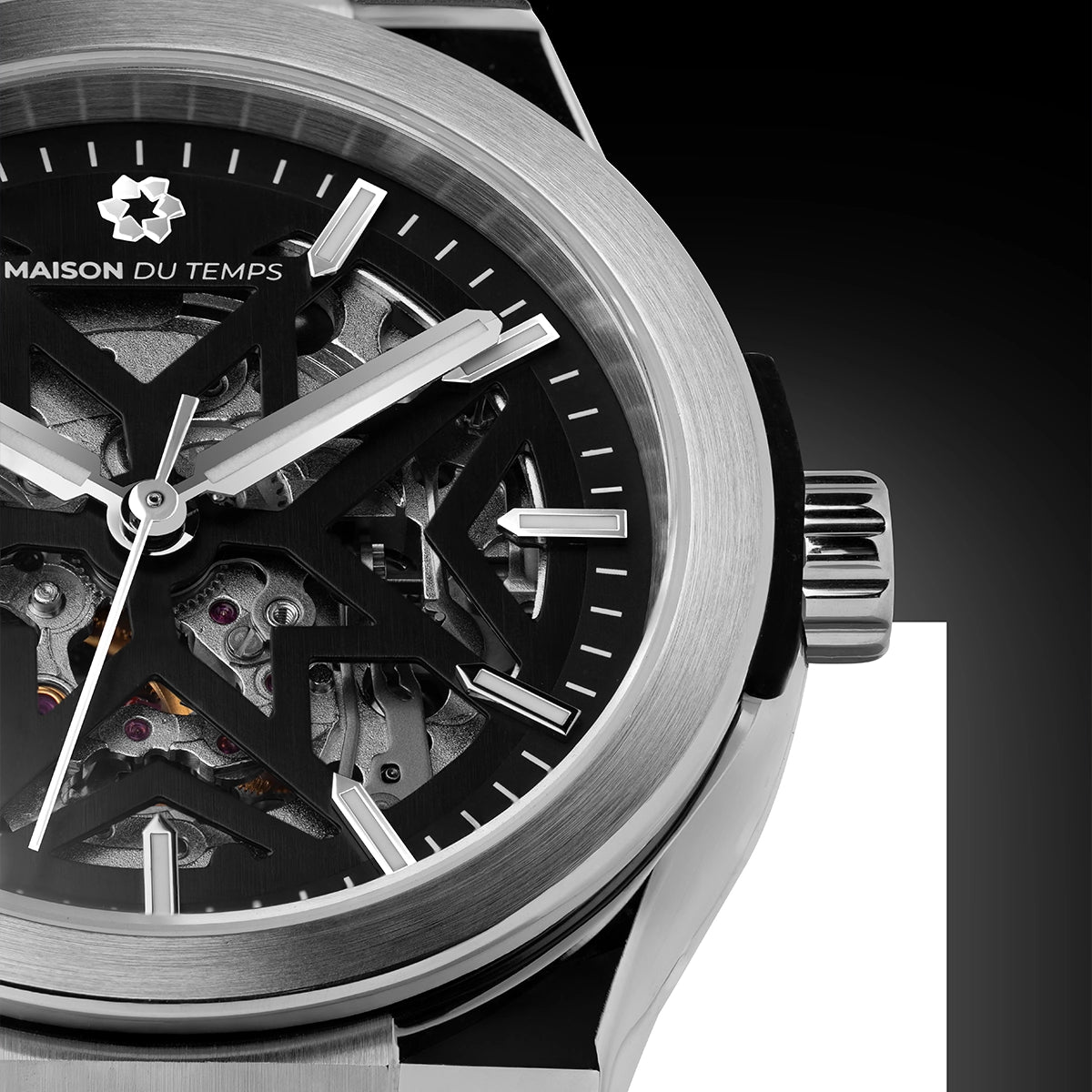
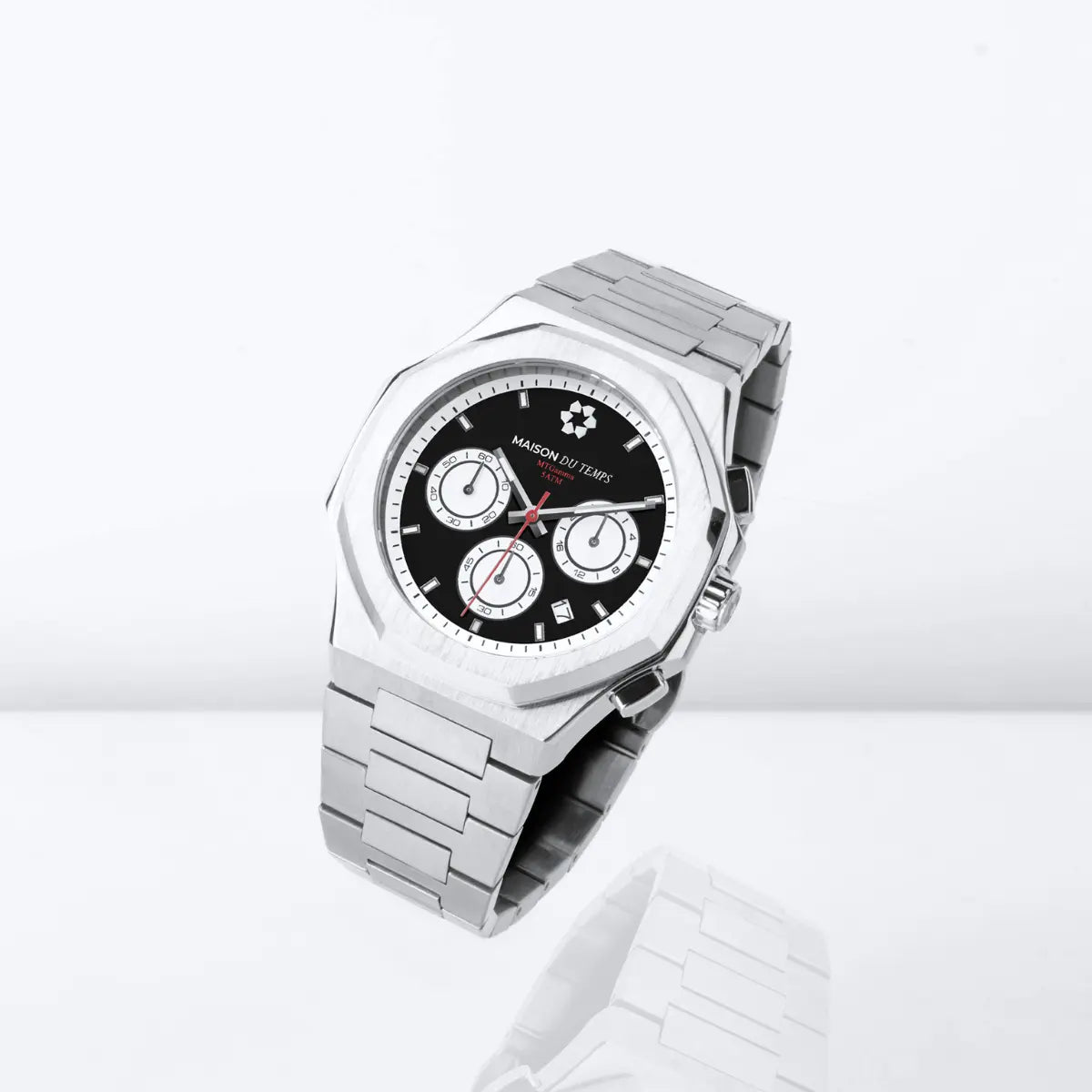
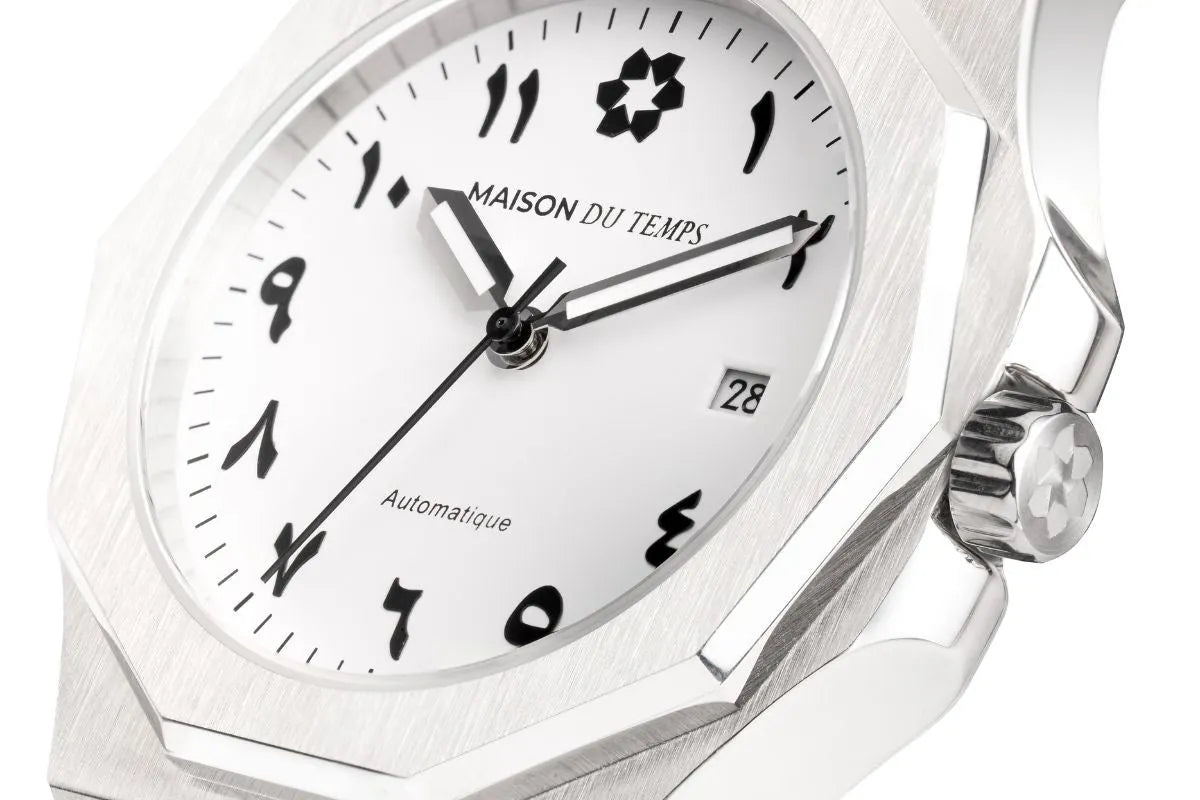
The MTZeta by MaisonDuTemps is a perfect embodiment of how Arabic numeral watches can be reinterpreted in a modern context. Its design, which combines elegance and functionality, is the result of a thorough consideration of how watchmaking tradition can be merged with contemporary elements. The watch features a clear and legible dial, adorned with stylized Arabic numerals, which not only makes time-reading easier but also adds a touch of modern elegance. The materials used, such as stainless steel for the case and sapphire glass for the dial, are chosen for their durability and aesthetics, reflecting MaisonDuTemps' commitment to quality and design.
Exceptional Precision and Reliability
Precision and reliability are at the heart of the MTZeta by MaisonDuTemps. Equipped with a Miyota 8215 movement, renowned for its accuracy and durability, the watch guarantees exact and reliable time measurement. This attention to movement quality is a testament to MaisonDuTemps' commitment to providing watches that are not only beautiful to look at, but also exceptional to use. Every component is carefully selected and assembled to ensure that the watch functions flawlessly, thus offering users a premium watchmaking experience.
Customization and Adaptability
The MTZeta stands out for its ability to adapt to individual tastes and needs. With customization options such as the choice between different dials, the watch allows users to adapt it to their personal style. Whether for daily use or special occasions, the MTZeta offers flexibility and adaptability that are essential in the world of modern watchmaking. This approach to customization underscores the importance of individuality in watch design, allowing each wearer to create a truly unique piece.

FAQ about Arabic Numeral Watches
What is the main difference between Arabic and Roman numerals in watches?
Arabic numerals, with their simple and linear design, offer superior legibility and a more modern style compared to Roman numerals. Roman numerals, on the other hand, are often associated with more classic and traditional designs. This aesthetic difference influences not only the appearance of watches but also their readability and functionality.
Are Arabic numeral watches more precise than other types of watches?
The precision of a watch is primarily determined by its internal mechanism and not by the style of its numerals. However, Arabic numerals, due to their clarity, can facilitate precise time reading, especially in low light conditions or for people with visual difficulties. Thus, although the numerals themselves do not affect the mechanical precision of the watch, they can improve the user experience in terms of legibility.
How to maintain an Arabic numeral watch to ensure its longevity?
To keep an Arabic numeral watch in good condition, it is important to follow a few key steps. First, regular cleaning with a soft cloth can help preserve its shine and prevent dirt accumulation. It is also advisable to protect the watch from water and shocks, even if it is waterproof, to preserve its internal mechanism. Finally, periodic servicing by a qualified watchmaker is essential to ensure that the watch functions correctly and to carry out any necessary repairs or adjustments. By following these tips, you can extend the life of your watch and ensure its proper functioning for many years.